Accounts are funded with crypto, which converts into a dollar-pegged balance for trading. Here's how deposits work, what they cost, and how to avoid the common mistakes.
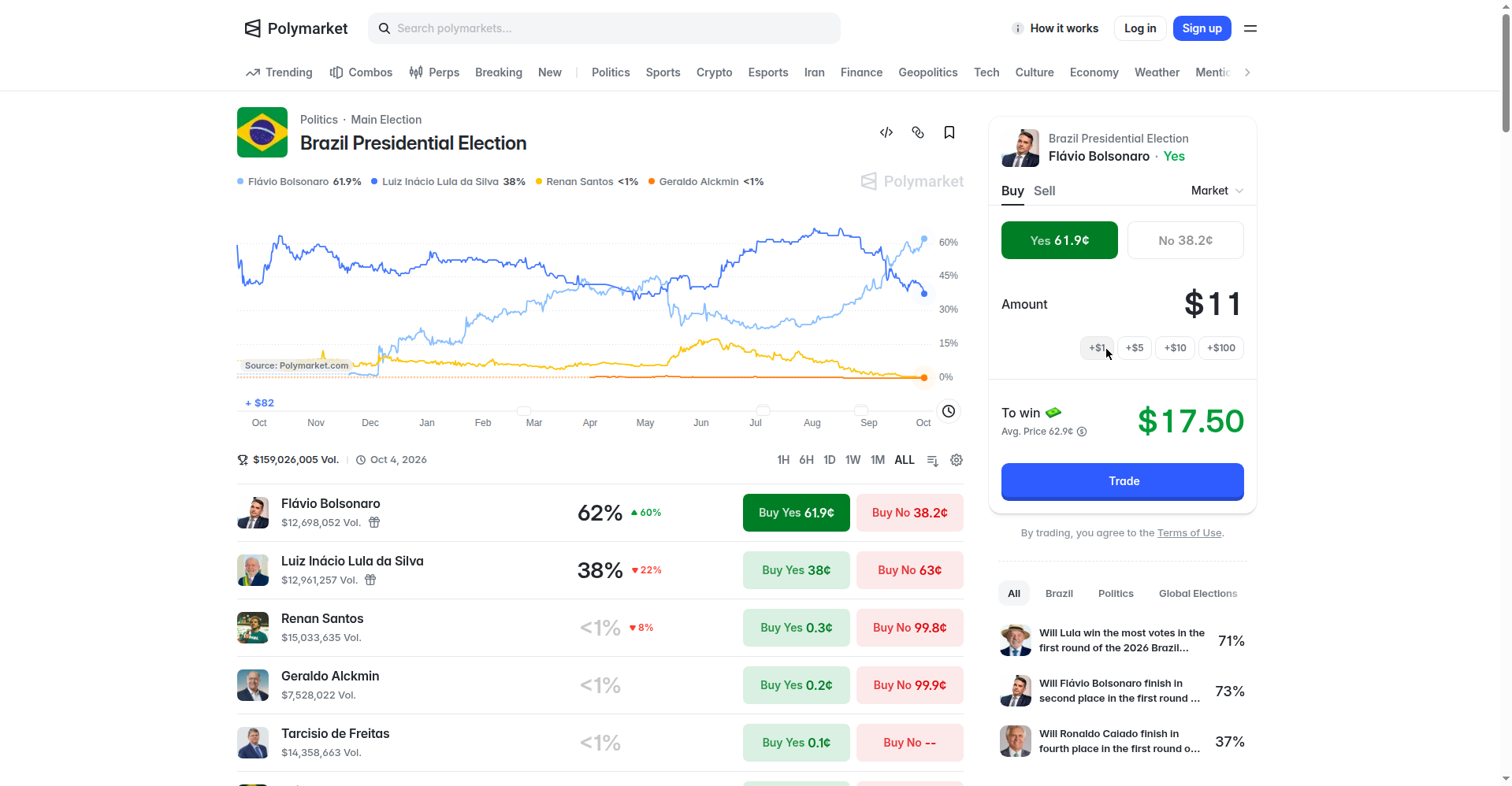
Screenshot: deposits convert to a dollar-denominated balance — the trade panel then shows your stake and projected payout in USD. Captured October 2026.
How deposits work
Open the deposit screen in your account to see your personal deposit address and the supported networks.
Choose the right network. Sending tokens on the wrong blockchain is the #1 way deposits get lost. Match the network exactly.
Send from your wallet or exchange. Copy-paste the address — never type it by hand — and send a small test amount first if you're unsure.
Wait for confirmations. Funds appear after the network confirms the transaction, typically minutes but occasionally longer when networks are busy.
Your balance converts automatically into the platform's dollar-denominated balance, so 1 unit equals $1 of buying power.
What you can deposit
The platform accepts USDC plus a wide range of other tokens across many blockchains, auto-converting them on arrival. Stablecoins (USDC and equivalents) are the simplest choice: no price movement between sending and arrival, and the lowest conversion friction.
💡 Tip: depositing a volatile token like ETH or SOL means its dollar value can shift during the transfer. If you want exactly $X of buying power, deposit a stablecoin.
Fees and minimums
Network (gas) fees are paid to the blockchain, not the platform — they vary by network and congestion. Some networks cost cents; others can cost dollars at busy times.
Exchange withdrawal fees apply if you're sending from a centralized exchange; check theirs before you send.
Conversion spread may apply when depositing non-stablecoin tokens, since they're swapped into dollars on arrival.
Minimums exist to keep tiny deposits from being eaten by fees — the deposit screen shows the current minimum.
⚠️ Never send from one network to an address on another. A Polygon address receiving tokens sent via Ethereum mainnet (or vice versa) can mean permanently lost funds. When in doubt, send a $5 test first.
Deposit checklist
✅ Address copied from the official deposit screen (not from a chat, email, or ad)
✅ Network on the sending side matches the network on the deposit screen
✅ Amount is above the minimum and worth the network fee
✅ You control the sending wallet, so you can troubleshoot if needed
 PolymarketBro