The displayed price is never the whole story. Here's every way trading costs you money — and why fees hit small trades hardest.
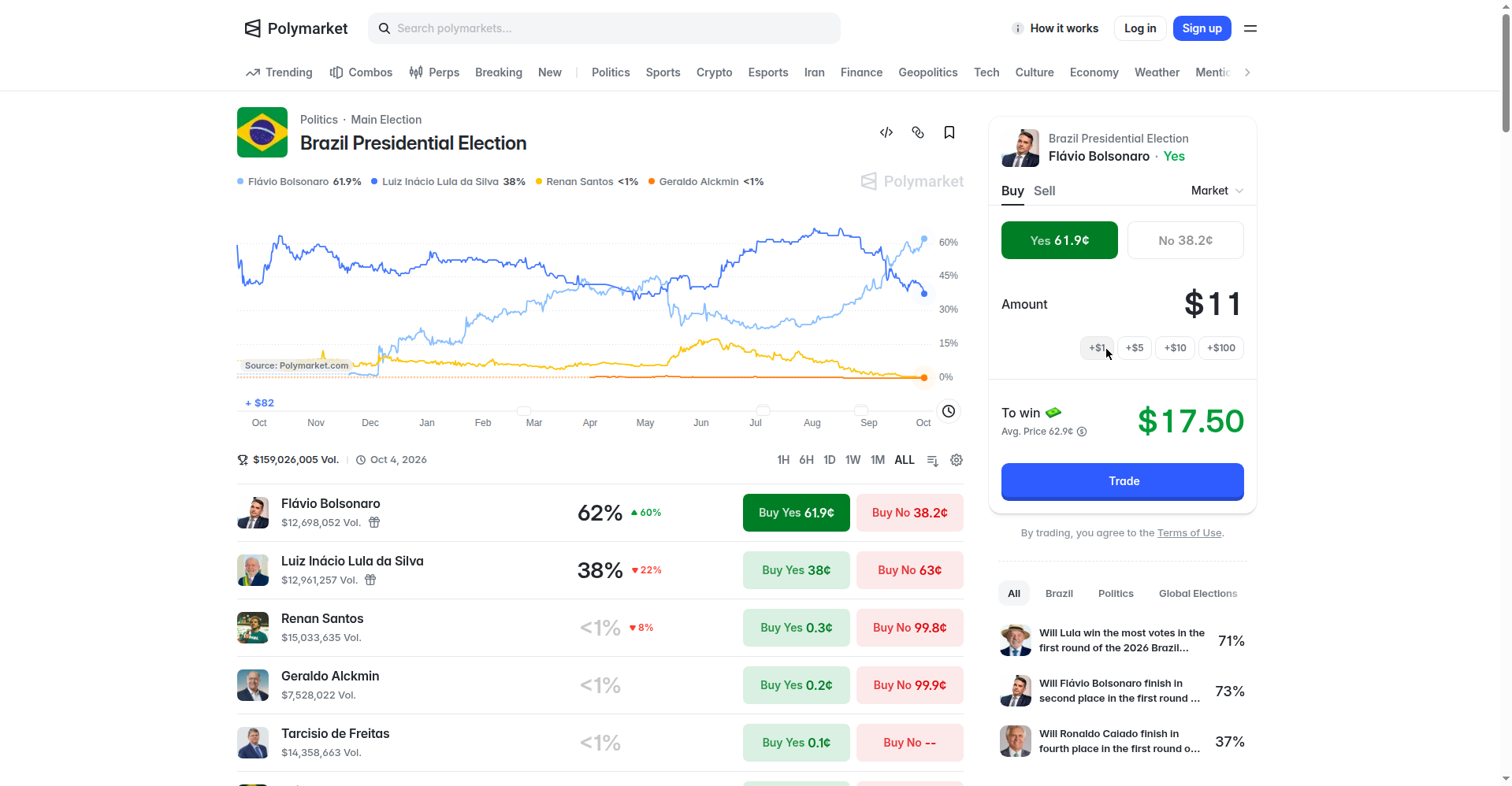
Screenshot: the order panel shows your average price and projected payout before you confirm — the price you see is the price you pay. Captured October 2026.
Where the platform makes money
Prediction markets need revenue to operate. The costs you face come from several directions, and most of them are invisible until you add them up:
Trading fees — a small cut taken on trades. The exact structure can change, so check the current fee schedule before sizing up.
The spread — the gap between buy and sell prices. Every round trip (buy then sell) pays the spread to whoever was on the other side.
Deposit and withdrawal costs — blockchain network fees plus any exchange withdrawal fees on the way in and out.
Conversion costs — if you deposit a volatile token, the swap into dollar balance happens at market rates with a small spread.
Why small trades suffer most
Fees are partly fixed and partly proportional, which punishes small size. Example:
A $10 trade with a 2¢ spread on each side and a $1 network fee can lose 20%+ to costs before the market even moves.
A $1,000 trade with the same spread loses a fraction of a percent to the spread; fixed fees become rounding errors.
💡 Tip: this is the real reason to start on big, liquid markets — tight spreads matter more than picking winners when your account is small.
The hidden cost: your time in the market
Money sitting in a position until resolution earns nothing. A trade that ties up $100 for three months to make $8 has a terrible annualized return even if the prediction was right. Shorter-dated markets recycle your capital faster.
 PolymarketBro