The two biggest names in prediction markets took very different paths: one crypto-native and global, the other regulated in the United States. Here's an honest look at both — strengths, weaknesses, and who each one suits.
| Polymarket | Kalshi | |
|---|---|---|
| Best for | Most markets, deepest liquidity, global users | US users who want dollar funding |
| Funding | USDC (crypto); Polymarket US uses dollars | Bank transfer / debit card (USD) |
| Fees | Taker only, by category (0–0.07 rate); makers $0 | Per-contract taker fees; makers mostly $0 |
| Markets | Politics, crypto, sports, culture, weather, niche topics — listed fast | Economics, politics, curated event contracts |
| Regulation | Global platform offshore; Polymarket US is CFTC-regulated via a licensed exchange | CFTC-regulated designated contract market |
Kalshi operates as a designated contract market regulated by the US Commodity Futures Trading Commission. That means formal oversight, standardized contracts, and a clear legal framework for American users — the tradeoff being that regulators get a say in what can be listed. Kalshi has fought public legal battles over whether certain markets (notably election markets) are permitted, and won key rounds.
Polymarket took the opposite route: built on blockchain rails, funded with crypto, and historically serving users outside the US. It settled with the CFTC years ago and has kept its distance from the American market since. Less regulatory friction on listings means a broader, weirder catalog of markets — but also less formal consumer protection if something goes wrong.
There's heavy overlap — politics, economics, crypto, culture, sports championships — but the catalogs differ in flavor:
If you want the widest menu and don't mind crypto, Polymarket wins on selection. If you want clean, standardized economic contracts with a regulator watching, Kalshi has the edge.
The platforms monetize differently, and both change their schedules periodically — always check the current fee page before sizing up:
Kalshi's dollar rails are friendlier for beginners who've never touched crypto. Polymarket's crypto rails are cheaper for people already living on-chain, but add a learning curve (wallets, networks, gas) if you're new.
Neither platform is perfect. Both suffer from wide spreads and thin liquidity on niche markets, both have seen resolution controversies on ambiguously worded questions, and both carry regulatory risk — Kalshi from future rule changes, Polymarket from operating in a gray zone in some jurisdictions. And on both, the uncomfortable truth holds: the crowd you're trading against includes professionals, and most retail traders lose money over time.
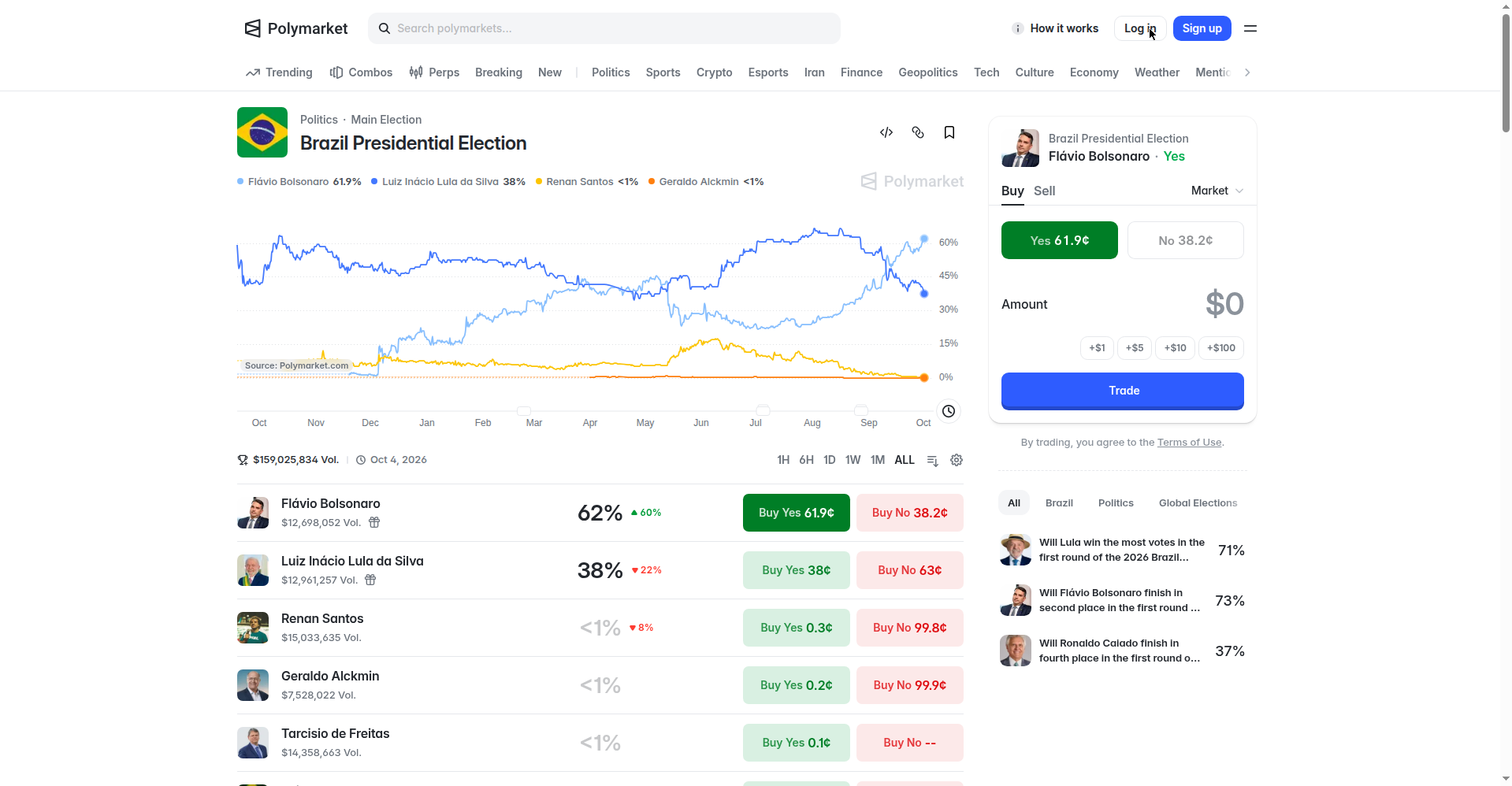
Browse the full catalog — politics, crypto, sports, culture — and watch how prices react to real news.
Sign Up on Polymarket PolymarketBro